What Does It Mean to Be Optimistic as a Physician?
Oct 6, 2026
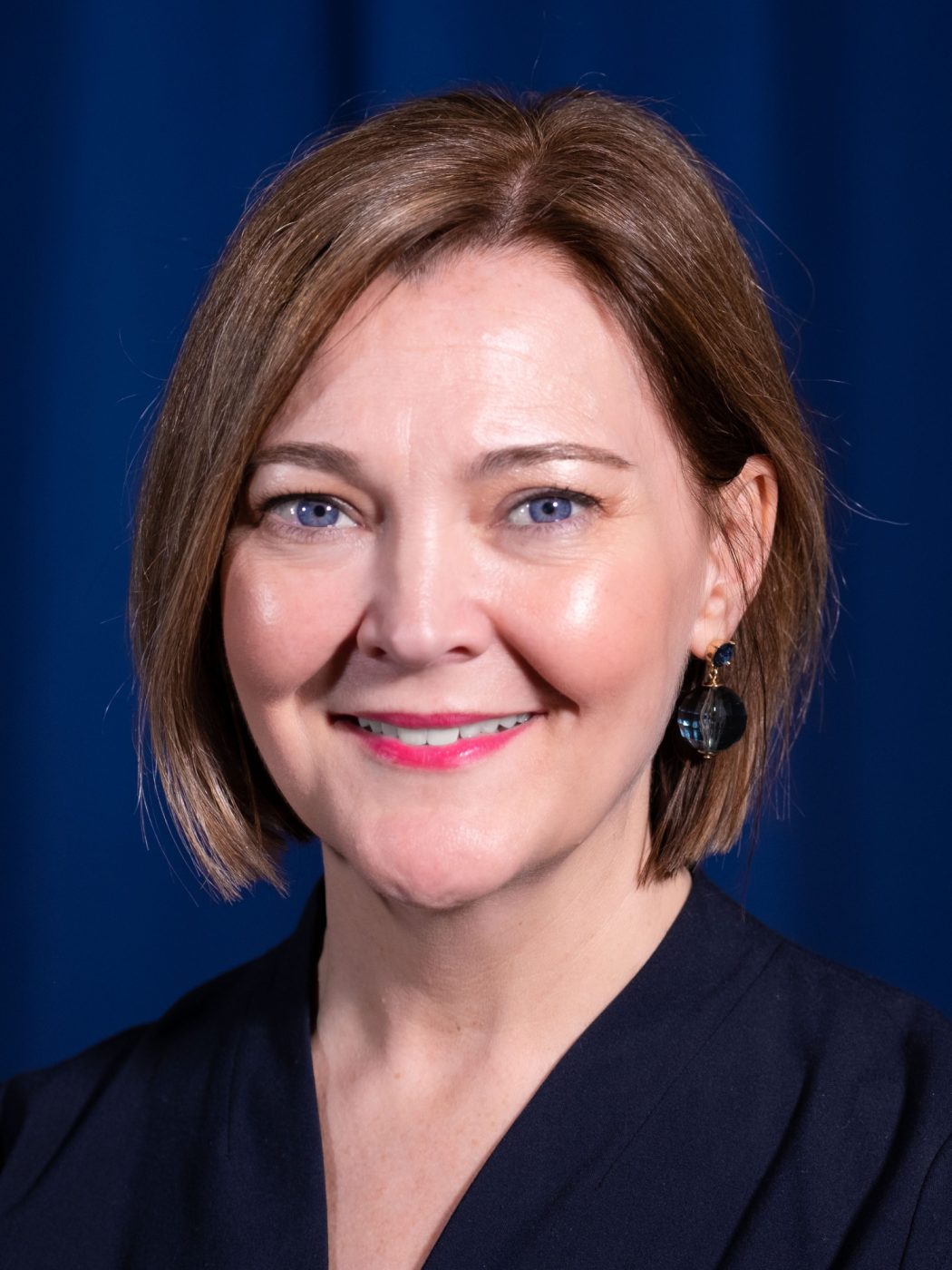
Angela Kristan, M.D.
One of my favorite podcasts is Office Hours with Arthur Brooks. Professor Arthur Brooks is known for his popular lectures and writing on happiness. In a recent episode, Professor Brooks interviews his friend and colleague, Simon Sinek, a self-described optimist.
Sinek’s view of optimism is neither naive nor blind. Rather, it is the enduring belief that the future is bright. Optimism acknowledges the difficulty, uncertainty, and suffering of the present while maintaining the conviction that a better future is possible, and that we can help build that future together.
For the past eight years, I have cared for patients in two very different areas of medicine: cognitive decline and dementia, and restorative reproductive medicine (RRM). Both have taught me something about the limits of medicine and about the necessity of optimism.
In memory care, I frequently deliver the difficult diagnosis of a chronic and progressive illness. While new therapeutics for Alzheimer’s disease are being introduced, none is curative. In RRM, I can help a couple optimize their health and fertility, but I cannot help the couple by manufacturing a child through technological means such as in vitro fertilization. I am called to help the couple receive life as a gift, not to produce life, usurping the role of the Creator. Nor can I promise a couple that they will be spared the painful loss of miscarriage.
In short, I cannot guarantee outcomes.
That reality could easily become a source of discouragement for a physician. We are trained to diagnose problems, formulate treatment plans, and measure results. Healing can sometimes be confused with fixing. It can be tempting, therefore, to equate successful medicine with achieving the outcome we desired.
But healing does not always mean cure.
I am consoled by the wisdom often associated with St. Teresa of Calcutta: we are called not to be successful, but faithful. That distinction has profound implications for the practice of medicine.
Optimism moves me to believe that there is still good to be pursued, even when I cannot guarantee the outcome. Christian Hope takes me further: it reminds me that the ultimate future does not depend upon my ability to produce that outcome. And Hope frees me to be faithful.
My duty as a physician, then, is not simply to cure disease or achieve a desired result. It is to accompany the person entrusted to my care, to pursue healing with excellence, to tell the truth with compassion, to relieve suffering when I can, and to remain present when I cannot.
In Evangelium Vitae, St. John Paul II offers a beautiful description of this vocation. He writes that healthcare professionals have a unique responsibility: our profession calls us to be “guardians and servants of human life.” He reminds us that the vocation of medicine is rooted in an absolute respect for human life and its sacredness.
To be a guardian and servant of life is different from being its master.
Perhaps this is one of the great temptations of modern medicine: because we possess remarkable abilities to diagnose, intervene, prevent, and treat, we can begin to imagine that the value of our work depends upon our ability to control its outcome. But the life before me is not valuable because I can cure it, preserve it indefinitely, or make it conform to my plans. It is valuable because it is human life, possessing a dignity that precedes my intervention and remains even when my therapeutic options are exhausted.
This is why the Gospel of Life encompasses the whole arc of medicine. St. John Paul II calls us to care for “all life and the life of everyone,” including the child in the womb, the person suffering from illness or disability, the elderly person approaching death, and every vulnerable person entrusted to our care.
There will be times when I cannot restore a patient’s memory. There will be times when I cannot help a couple conceive or prevent the loss of a pregnancy. There will be times when medicine reaches the boundary of what it can accomplish.
But the physician’s vocation does not end at that boundary.
For the Christian physician, something even more profound begins there. Jesus tells us, “I was ill and you cared for me” and “whatever you did for one of these least brothers of mine, you did for me” (Matthew 25:36, 40). The suffering patient is therefore not simply someone for me to treat. He or she is someone in whom I am invited to encounter Jesus.
And the encounter moves in both directions. As I am called to recognize Jesus in the patient, I am also called to make Him present to the patient. Through competence, compassion, truthfulness, tenderness, and fidelity, the physician can become an instrument of the Divine Physician. My vocation is most fully lived not merely when I cure, but when the person entrusted to my care encounters, through me, something of the healing love of Jesus.
This changes what it means to heal. Cure remains a good to be pursued, sometimes with every tool medicine can rightly offer. But cure is not the measure of a person’s worth, nor is it the only measure of a physician’s faithfulness. Even when disease progresses, fertility is not restored, pregnancy ends in loss, or death approaches, the encounter between physician and patient can still become a place of healing, a place where suffering is met with love, fear with presence, isolation with communion, and despair with Hope.
Perhaps this is the fullness of Christian Hope in medicine: to recognize Jesus in the person before me and, by the way I care for that person, to make the healing presence of Jesus visible in return.
Perhaps, then, this is what it means to be an optimistic physician: to believe that there is always good worth pursuing, healing worth seeking, and a person worth accompanying, even when cure is no longer possible and the outcome is beyond our control.
For Respect Life Month, perhaps we are invited to remember that respecting life means more than protecting life from particular threats. It means learning to receive every human life as a gift and to recognize the dignity of the person before us, especially when that life is vulnerable, dependent, suffering, or beyond our ability to fix.
Optimism moves us toward a better future. Hope anchors us when the future we desired is not the future we receive. Faithfulness keeps us beside the patient in either case.
And perhaps that is what it means, in the words of St. John Paul II, to become a people “of life and for life”: not because we can guarantee every outcome, but because no human life is without dignity, no suffering person is unworthy of our presence, and no encounter offered to Christ is without meaning.